Sukkot 2026 | New Wine

Lulav and Etrog

Four botanical descriptions. A harvest celebration. An invitation to rejoice before the LORD. “You shall rejoice before the LORD your God seven days.” - Leviticus 23:40

Scripture

What Does the Text Actually Say?

The practice commonly called "waving the lulav" comes from Leviticus 23:40.

"And you shall take for yourselves on the first day the fruit of beautiful trees, branches of palm trees, the boughs of leafy trees, and willows of the brook; and you shall rejoice before the Lord your God for seven days." Leviticus 23:40
What Scripture Says

Take the Four Species and Rejoice

Leviticus 23:40 commands Israel to take fruit from beautiful trees, branches of palm trees, boughs of leafy trees, and willows of the brook, and to rejoice before YHWH for seven days.

The emphasis of the command is not primarily on a ritual technique. It is an act of rejoicing before God during Sukkot using vegetation associated with the abundance and provision of the land.

Scripture gives us the command and identifies four kinds of vegetation, but it does not explain precisely how they are to be assembled or how they are to be moved during worship.

NOTICE Later teachers have associated the four species with different kinds of people, parts of the body, or aspects of creation.
These are meaningful teaching traditions, not explanations supplied by Leviticus itself.

The arba minim

The four species

etrog

פְּרִי עֵץ הָדָר

Etrog

Citron (fruit)

Biblical phrase: Fruit of a beautiful tree

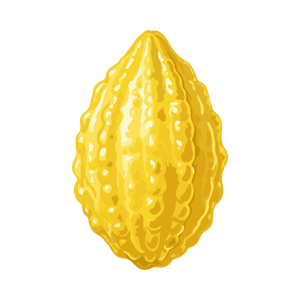
A fragrant citrus fruit held separately from the bound branches.

palm

כַּפֹּת תְּמָרִים

Lulav

Date-palm frond

Biblical phrase: Branches of palm trees

The tall central palm frond that gives the combined set its common name.

myrtle

וַעֲנַף עֵץ־עָבֹת

Hadas

Myrtle

Biblical phrase: A branch of a dense-leaved tree

A leafy, aromatic branch traditionally placed alongside the palm.

willow

וְעַרְבֵי־נָחַל

Aravah

Willow

Biblical phrase: Willows of the brook

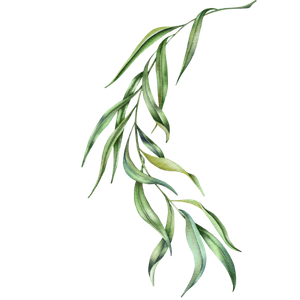
A long-leafed branch associated with watercourses and placed beside the palm.

The Hebrew phrases above follow the Masoretic text of Leviticus 23:40. Species names are traditional identifications, clearly distinguished from the wording of the verse.
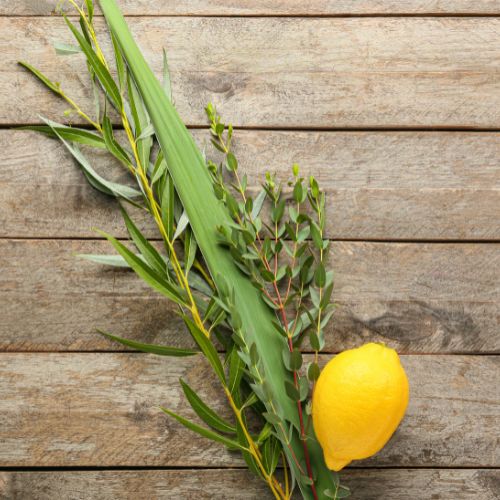
Palm frond, leafy branches, willow branches, and a yellow citron arranged on a dark background

How the set fits together

One set, four species

In the widespread traditional arrangement, one palm frond stands at the center with three myrtle branches and two willow branches bound beside it. One etrog is held separately.

  1. Center: 1 palm, upright.
  2. Alongside: 3 myrtle and 2 willow, bound securely but gently.
  3. Separate: 1 etrog, handled with care.
Traditional practice (not stated in Leviticus 23:40)
The standard 1–3–2–1 arrangement is recorded in Mishnah Sukkah 3:4.
In contrast, Rabbi Akiva ruled that you only need exactly one of each item.